Types of Guideways in CNC Machining Centers
CNC machining centers are computer-controlled machine tools designed for machining prismatic solid workpieces through metal cutting operations.


These systems simplify operations that traditionally required manual labor while helping manufacturers save both time and production costs.
CNC machining centers are capable of performing operations such as:
- Milling
- Drilling
- Boring
- Tapping
- Reaming
- Thread cutting
- Turning-like operations
with high precision and repeatability.
One of the most important structural components affecting the performance of CNC machining centers is the guideway system. In this article, we examine the main types of CNC guideways and their characteristics.
Types of CNC Guideways
1. Box Guideways
Also known as hydrostatic friction guideways, box guideway systems operate through direct surface contact between the guide and sliding components.
In this system:
- Approximately 5 microns (0.005 mm) of clearance exists between the guide surfaces
- A thin oil film is maintained between these surfaces to ensure smooth movement and minimize friction
Advantages of Box Guideways
Box guideways offer several important advantages, including:
- High rigidity
- Low vibration levels
- Superior shock absorption
- Strong and deep cutting capability
- Suitability for machining a wide range of materials
Because of these characteristics, box guideways are particularly suitable for heavy-duty machining applications.
When Should Box Guideways Be Preferred?
Box guideways are generally preferred when:
- Hard materials are being machined
- Heavy workpieces are used
- Interrupted or impact-heavy cutting operations are required
- Deep cuts and high material removal rates are necessary
Their high rigidity and vibration damping capability make them ideal for stable heavy machining operations.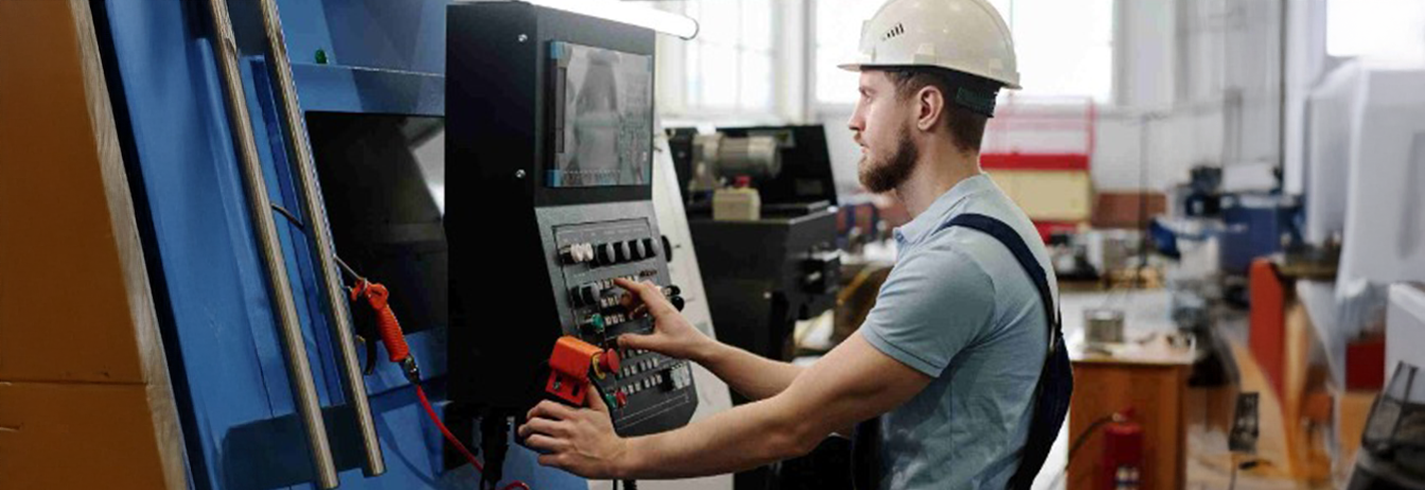
2. Linear Guideways (Roller-Type Linear Guides)
Unlike box guideways, linear guideway systems replace sliding surface contact with a carriage-and-rail mechanism.
Movement occurs through rolling elements such as:
- Ball bearings
- Rollers (rollers are more common in heavy-duty applications)
These rolling elements move between the carriage and guide surfaces while lubricated with oil.
Advantages of Linear Guideways
Linear guideways provide several significant advantages:
- High-speed movement capability
- High positioning accuracy
- Long service life
- Lower manufacturing cost
- Lower maintenance and repair costs
Because rolling friction is much lower than sliding friction, linear systems are generally faster and more efficient.
When Should Linear Guideways Be Preferred?
Linear guideways are generally preferred when:
- High machining speed is important
- Tight tolerances and high dimensional accuracy are required
- Workpieces have relatively smooth and regular geometries
- Heavy cutting depths are not necessary
These systems are especially suitable for high-speed precision machining applications.
Choosing the Right Guideway System
Both linear motion systems and box guideway systems have their own unique advantages and operational characteristics.
For this reason, manufacturers should evaluate CNC guideway types based on:
- The type of machining operation
- Material characteristics
- Required cutting depth
- Desired machining speed
- Precision requirements
- Production costs and maintenance considerations
There is no universally “better” guideway system. The correct choice depends entirely on the intended production application and manufacturing goals.
At GNC Makina, we help manufacturers select the most suitable CNC machining technologies and machine configurations according to their production needs, ensuring maximum efficiency, precision, and long-term operational performance.